

Classification by structure
1. Integrated toilet: it is more convenient to clean, because it is one body forming, reducing the seam, so it is not easy to hide dirt, daily cleaning is more simple and convenient; Some high-end products have water-saving function, in line with the concept of environmental protection.
But at the same time, the production process of the integrated toilet is relatively complex, so the price is generally high; Maintenance is also difficult, once the failure, the maintenance cost is relatively high; The installation environment requires high requirements and sufficient bathroom space must be ensured.
2. Split toilet: the price is close to the people, suitable for families with limited budgets; Easy to transport and convenient maintenance, water tank and barrel body can be separated separately, reducing the difficulty and cost of maintenance; With sufficient momentum, the water level of the split toilet tank is often higher than that of the integrated toilet, which is suitable for scenes requiring a strong scouring effect.
But at the same time cleaning is relatively complicated: seams are prone to dirt and dirt, and need to be cleaned regularly to avoid bacterial growth. The split toilet should not take up space, but because it can separate the tank and the base, it is easy to transport.

When buying a toilet, in addition to the shape of the product itself, it is also important to pay attention to the wall distance of the toilet, that is, the distance between the toilet and the wall, which is a factor that needs to be carefully considered in the design and decoration of the toilet. This distance not only affects the installation and use comfort of the toilet, but also is closely related to the overall layout and aesthetics of the toilet. At the same time, the distance between the center of the water outlet and the back wall is also very important, and the standard distance is generally divided into 305mm and 400mm.

For the test of the sewage effect of a toilet, we can divide into three aspects: scouring performance, hanging pollution performance and water seal depth.
Scour property
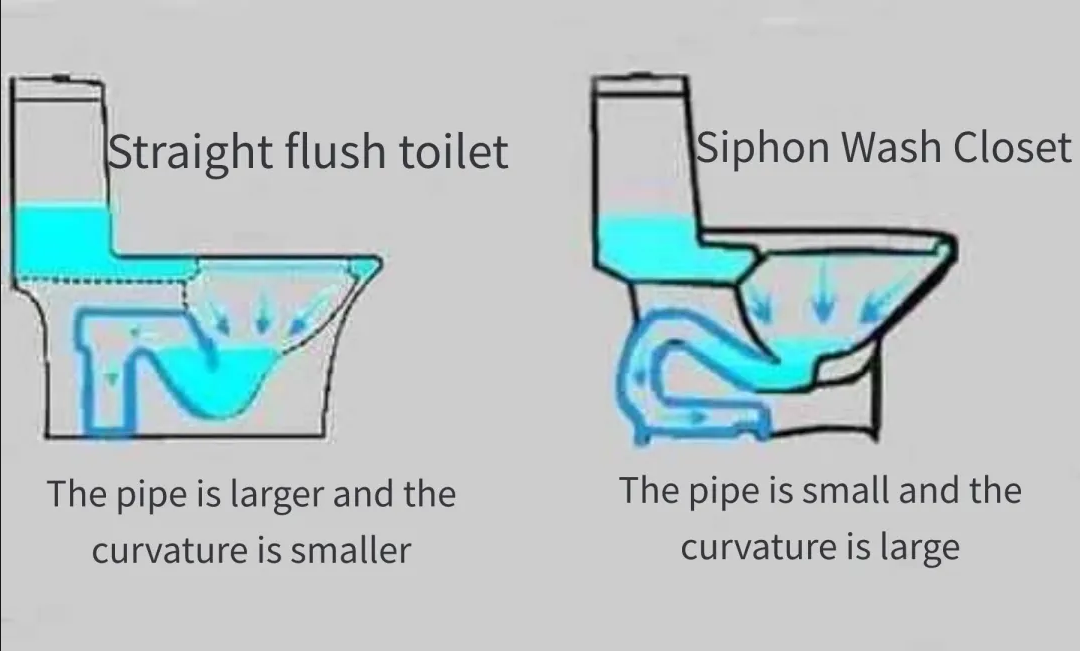
Whether the toilet can be completely cleaned is its most basic function. In the laboratory, we simulated 100 solid balls into the toilet and conducted a sewage test, and the results showed that all the solid balls were discharged from the toilet, which fully proved the strong impulse of the toilet. We put newspaper pieces and spitballs into the toilet at the same time, and after starting the drainage, the results showed that the newspaper pieces were easily carried away by the water, achieving a perfect stain removal effect. Therefore, the results from multiple indicators show that the flushing performance of this toilet is excellent, thanks to its unique vortex siphon technology, and enhanced siphon technology supplemented by jet effect.
Fouling performance
In actual use, we often encounter some sticky stains attached to the inner wall of the toilet, which brings great trouble to the washout. Therefore, the fouling performance of the toilet is particularly important. The researchers smeared ink on the inside of the toilet, rinsed it, and then tested for residue. The experimental results show that for three consecutive tests, the ink line is washed clean each time, and there is no residue at all, which is far better than the national standard requirements that the ink is not more than 50mm after washing. This result not only saves us from the trouble of frequent toilet scrubbing, but also makes the toilet cleaner more thoroughly.
Water seal depth and area test
Water seal depth test: Check whether the water seal depth of the toilet meets the standard requirements (such as ≥50mm), and the water seal depth is enough to seal the sewage outlet, prevent odor distribution, and also help improve the sewage effect.
Water seal area test: Ensure that the water seal area meets the specified requirements (such as ≥100×85mm) to provide better sealing effect and sewage protection.

